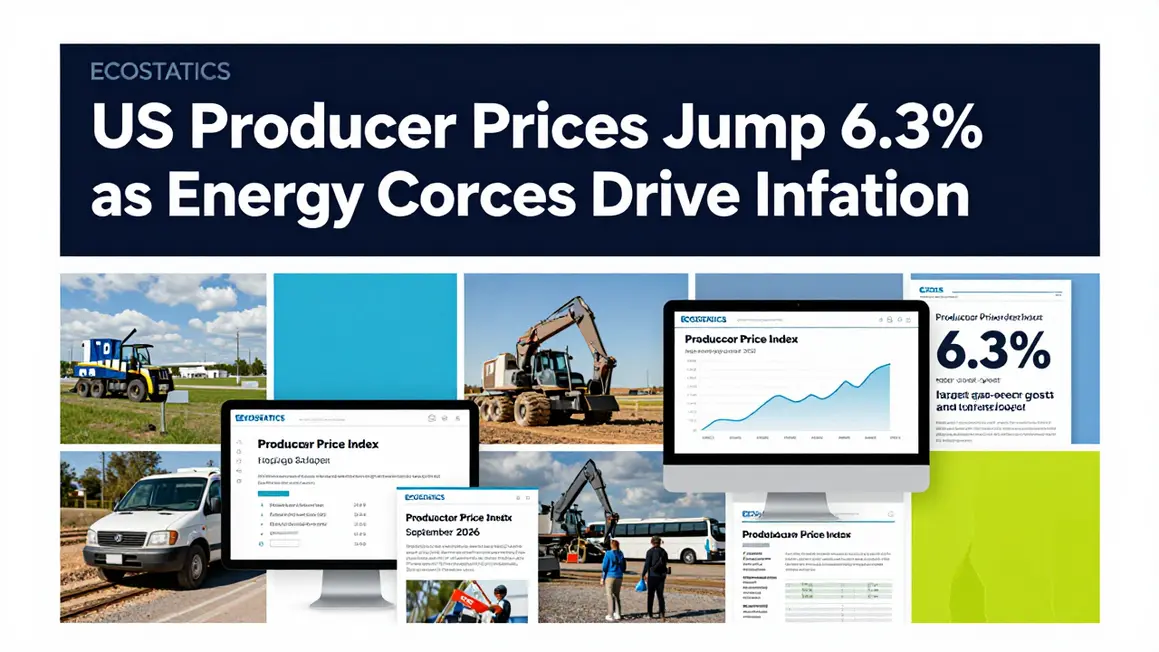
September PPI Rise Signals Ongoing Energy-Driven Inflation Pressures
The Producer Price Index, or PPI, tracks the average change in selling prices received by domestic producers for their goods and services. Unlike the retail-focused Consumer Price Index that households see on grocery bills and fuel pumps, the PPI measures costs at the wholesale stage before they reach businesses and consumers. A rise at this level serves as an early warning of inflationary pressures that could eventually push up prices for everyday items. In September 2026, the PPI climbed 6.3 percent year-over-year, the largest annual increase since 2022. This marked the biggest monthly jump since March 2022 as well, climbing 1.3 percent from the prior month. Both readings beat economist forecasts of 0.6 percent monthly and 5.5 percent annually, according to Bureau of Labor Statistics data reported by CNBC.
The useful takeaway is clear: while this does not mean consumer prices will jump immediately, the surge underscores persistent inflationary forces tied to energy markets. These pressures can raise input costs for US businesses, potentially flowing through to higher prices for fuel, groceries, and other goods in the months ahead. The timing and magnitude of any pass-through remain uncertain, depending on market responses, inventory levels, and how quickly businesses adjust pricing.
The Headline PPI Figures and Core Trends
The overall PPI advance of 6.3 percent annually reflects broad cost increases across sectors. Energy played a leading role, fueled by supply disruptions linked to conflict in the Middle East that curtailed oil flows and drove prices higher. At the same time, the core PPI—calculated after removing volatile food and energy items—rose 5 percent year-over-year and 0.7 percent month-over-month. This core measure reveals that underlying inflation pressures extend beyond temporary commodity spikes, affecting a wider range of wholesale activities.
For US workers and businesses, these distinctions matter because core PPI better isolates structural cost trends without the noise of energy volatility. The BLS release followed a hotter-than-expected Consumer Price Index report showing 3.7 percent annual inflation. Together, these data points illustrate how energy markets are transmitting effects from wholesale to retail levels. The PPI data remain preliminary until final revisions, and actual consumer impacts depend on subsequent pricing decisions by manufacturers and retailers.
Energy Costs, Diesel Spillover, and Supply Chain Effects
Energy costs accounted for a sizable portion of the PPI increase. Soaring oil prices, driven by geopolitical factors, directly lifted the index. A key development was the linkage to processed goods for immediate consumption: nearly half of September's rise in this category traced back to higher diesel fuel prices. This spillover demonstrates how energy shocks propagate through supply chains, raising transportation and logistics expenses that feed into manufacturing and distribution.
For households, this mechanism explains why pump prices and related costs can stay elevated even as headline energy figures fluctuate. Businesses that rely on diesel-intensive operations—trucking fleets, delivery services, or agricultural inputs—face squeezed margins or must pass costs to customers. The effect is not immediate across all sectors but creates a clear pathway for broader price pressures in fuel, food, and consumer goods. Uncertainty remains high because pass-through speeds vary by contract terms, inventory buffers, and local supply conditions. If demand softens, as hinted in related spending data, some absorption of these costs could occur without full inflation transmission.
Retail Sales Data and Consumer Behavior Signals
The September PPI release coincided with retail sales figures showing an 0.8 percent month-over-month gain, stronger than the 0.4 percent forecast. However, this growth slowed from the prior month and slowed further when autos and gas stations were excluded, registering only 0.25 percent. This pattern reveals how elevated energy costs are directly constraining household spending outside of fuel purchases.
US households and small businesses feel this in real time: higher fuel prices reduce disposable income for other categories, tightening budgets on groceries, apparel, and services. The slowdown offers evidence that energy-driven inflation is already influencing consumer behavior, even as wholesale prices accelerate. For businesses, these retail trends signal potential weaker demand, which could moderate future price increases if producers adjust accordingly. The data do not yet establish a broad recession signal but highlight a cautious consumer backdrop amid ongoing cost pressures.
Broader Context, Policy Outlook, and Next Evidence to Watch
The PPI results arrived against a backdrop of record mentions of inflation in the Federal Reserve's Beige Book and futures markets now pricing in a nearly 34 percent chance of a rate hike at the Federal Reserve's October 28 meeting, up from under 18 percent a week earlier. Roughly 90 percent of traders expect at least one increase by year-end. Higher borrowing costs from such a move would raise expenses for mortgages, credit cards, and business loans, compounding the effects of elevated input prices.
For US households, the net result could include higher mortgage payments, credit card rates, and retail prices if energy-driven wholesale inflation fully transmits. Businesses may face margin compression unless they can offset costs through efficiency gains or price adjustments. The evidence points to sustained pressures rather than a quick resolution, with energy as the primary driver but broader core trends signaling lasting inflation risks ahead of the midterm elections.
Looking ahead, watch for revised PPI data in coming months, the Federal Reserve's policy response, and retail price movements to gauge the actual speed of consumer pass-through. These figures remain preliminary and subject to revision; actual household costs will depend on how markets and businesses respond in the weeks and months that follow.