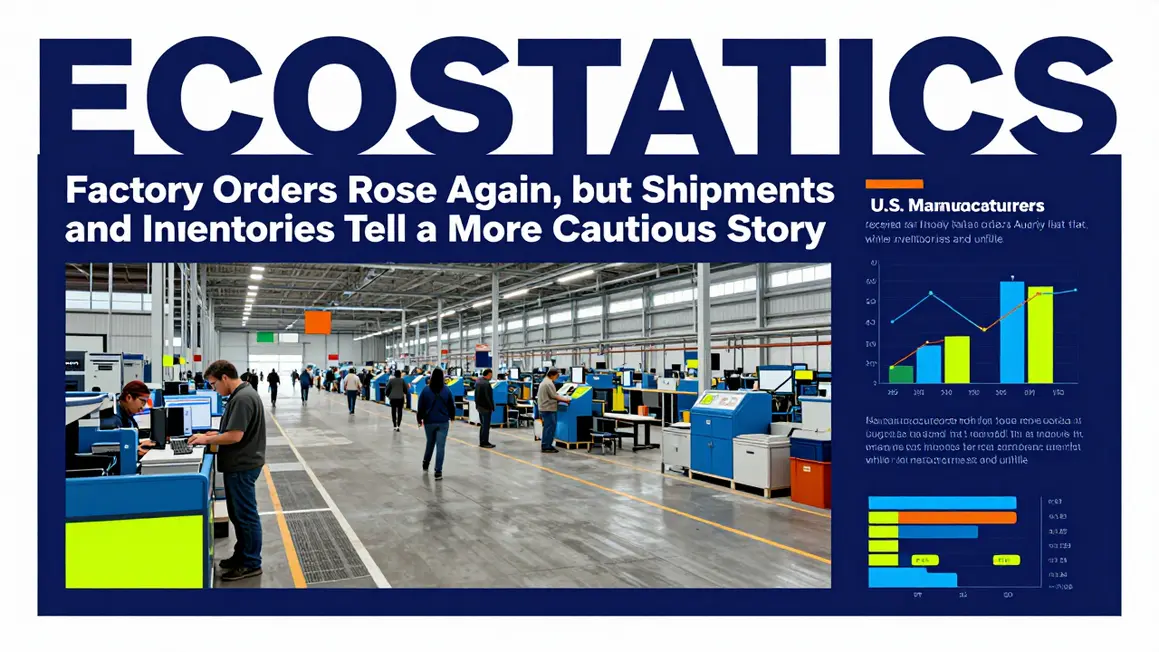
The Census Bureau’s August factory report offers a mixed signal for U.S. manufacturers. New orders rose for a second month, but by just 0.1%, to $663.5 billion. Shipments were virtually unchanged, while inventories and unfilled orders increased. Those measures track different parts of the production pipeline, and their divergence matters: new demand is reaching manufacturers, but the data do not show that a broad pickup in production or deliveries has followed.
For businesses, the difference between an order placed, a product shipped and an item held in inventory can shape production schedules, cash needs and hiring. For customers and workers, the report is a clue about industrial activity, not a direct measure of what is happening at any one factory or in the broader labor market.
Orders are not deliveries
New orders for manufactured goods increased $0.7 billion, or 0.1%, in August, after a 0.8% rise in July. The two consecutive gains show that incoming orders did not fall in those months. But the August increase was small, and orders are a measure of commitments received, not goods already delivered or revenue collected.
Shipments, which measure the value of goods sent out by manufacturers, decreased by less than $0.1 billion and were virtually unchanged at $658.6 billion. That ended eight consecutive monthly increases, according to Census. The contrast is worth watching, but one flat month does not establish that deliveries are turning down. Monthly estimates can fluctuate, and the figures may later be revised.
Nor does the aggregate settle whether demand is strong in any particular industry. The total combines manufacturers producing a wide range of goods, from machinery and electronics to transportation equipment. A headline increase can coexist with weakness in some sectors and strength in others. The detailed tables are needed to identify where orders changed; the total alone cannot tell a business whether its own customers are pulling back.
More goods are waiting in the pipeline
Unfilled orders rose 0.6% to $1,609.6 billion in August, the twenty-fifth increase in the last twenty-six months. The unfilled-orders-to-shipments ratio edged up to 6.87 from 6.81 in July. This ratio compares the stock of orders still to be filled with shipments during the month. A rising reading can be consistent with a larger backlog relative to the current delivery pace, but it does not by itself explain why orders remain unfilled.
A backlog can reflect strong demand, longer production timelines, supply constraints or the timing of large contracts. The report does not isolate these causes. It also does not mean every outstanding order will turn into a shipment on schedule: orders can be delayed, changed or canceled. For manufacturers planning shifts, staffing or purchases, the composition and age of the backlog matter more than the national total alone.
Inventories also rose. Manufacturers’ inventories increased 0.5% to $972.4 billion, the eleventh consecutive monthly gain. The inventory-to-shipments ratio moved to 1.48 from 1.47. This ratio relates goods held in inventory to shipments in the month; it is not a count of how many months of demand a company can meet, and it does not establish that goods are piling up unwanted.
What the combination can and cannot say
Orders, shipments, unfilled orders and inventories describe different stages of production and distribution. Rising orders alongside rising backlogs may be consistent with firms having more work than they have shipped. Rising inventories can help businesses meet future orders or buffer disruptions. But if inventory grows faster than sales for an extended period, firms may eventually slow production or discount goods to clear stock. August’s national figures do not establish that such an adjustment is underway.
Cash flow is another practical consideration. Goods that have been produced but not shipped, or inputs purchased ahead of production, tie up working capital. A business facing a large backlog may need more labor, materials and financing to fulfill it. Conversely, if demand weakens, inventory accumulated in anticipation of orders may become costly. Those are possible business mechanisms, not reported outcomes for every manufacturer in August.
For households, the report has no direct implication for store prices or job security. It does not measure consumer prices, factory employment, wages or the number of products available in shops. Any effect on workers depends on whether orders translate into sustained production and staffing decisions. Any effect on shoppers depends on industry-level supply, demand, costs and retailers’ pricing, none of which can be inferred from the overall factory-orders total.
The next test is follow-through
The August release supports a measured conclusion: manufacturers received modestly more orders for a second month, but shipments stalled and both inventories and backlogs grew. That is evidence of activity in the pipeline, not confirmation of an industrial boom or a downturn.
The next reports should show whether orders continue to rise and whether shipments catch up. Industry detail can reveal whether gains are broad or concentrated, while subsequent months will help distinguish normal inventory management from a persistent buildup. Until those signals arrive, companies should treat the latest figures as one input to planning, and readers should avoid reading a single month’s mix as a verdict on U.S. manufacturing.